
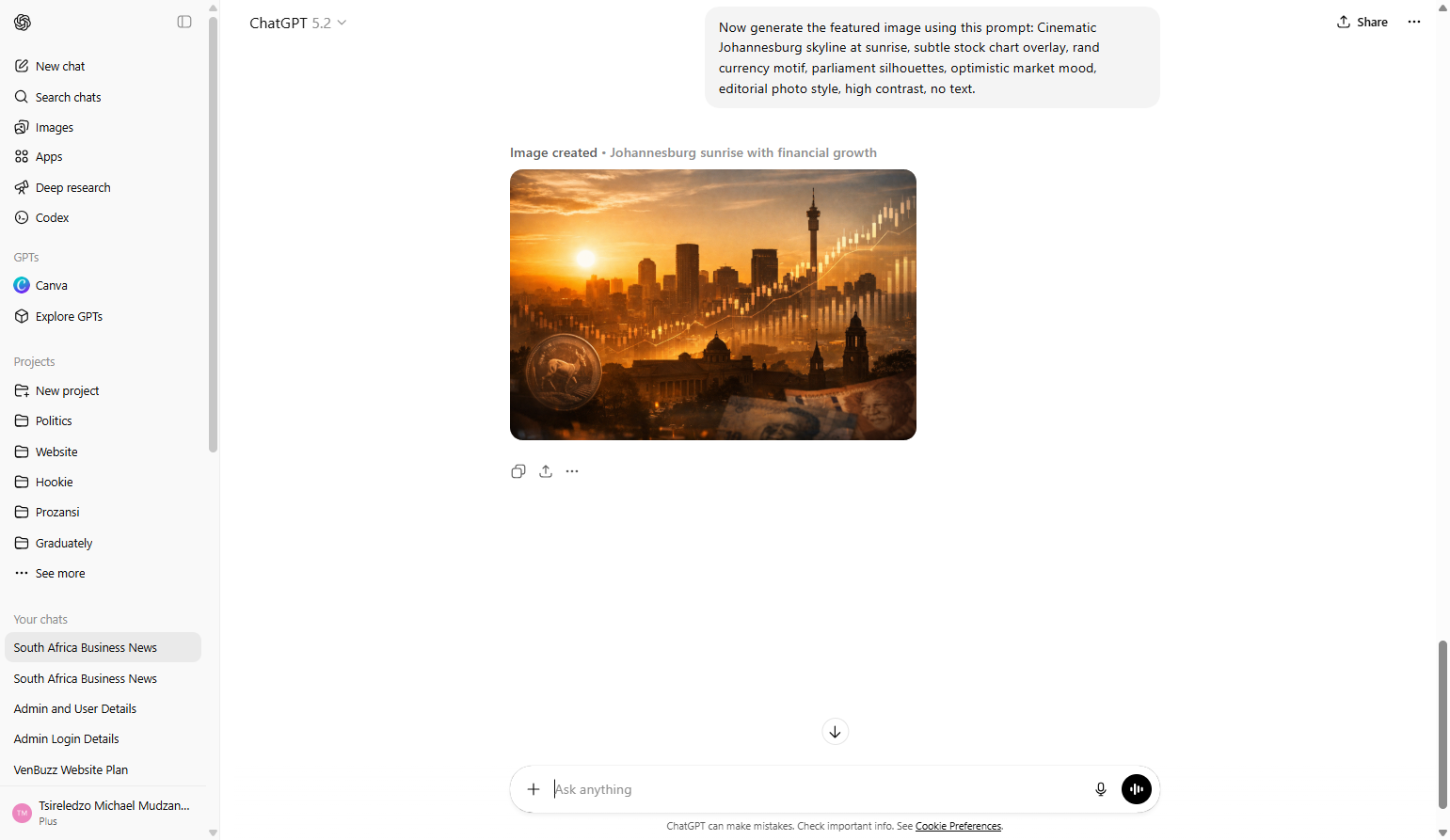
CAPE TOWN, South Africa | 25 February 2026 — South Africa’s business landscape pivoted sharply on Wednesday as Budget 2026 landed in Parliament and immediately rippled through markets. The day’s message was clear: government wants to reinforce credibility on debt, keep reforms moving, and protect key spending priorities, while investors responded with a stronger rand and a firmer equity market close. What matters now for companies and consumers is how quickly policy intent translates into execution, from fiscal rules to growth-enhancing reforms.
Budget 2026: Treasury Tees Up a Legal “Fiscal Anchor” and Sketches a Debt-Peak Narrative
The headline takeaway from Budget Day is government’s renewed push to convince investors, ratings agencies, and the private sector that the public finances are moving toward a more predictable path. National Treasury indicated it intends to propose a legal “fiscal anchor” later in 2026 — a move designed to put clearer guardrails around borrowing and strengthen confidence in medium-term planning.
In the same fiscal frame, Treasury’s projections point to gross debt peaking at roughly 78.9% of GDP in 2025/26 before edging down over the following years. For business, this matters because debt dynamics shape everything from long-term interest-rate expectations to the risk premium embedded in the currency and local bond yields.
Treasury also leaned on a modestly improving growth backdrop. Official forecasts remain incremental rather than explosive, but the direction is important for investment committees deciding whether to expand capacity, hire, or pursue acquisitions. The key corporate question is whether the fiscal anchor becomes a credible, enforceable mechanism, and whether it is paired with reforms that can lift trend growth rather than simply stabilise debt at a high level.
Rand Firms After the Budget: Markets Reward Fiscal-Sustainability Signals
Currency traders delivered an early verdict: the budget’s fiscal-sustainability posture helped strengthen sentiment. The rand traded firmer after the speech, with the currency around R15.855 to the dollar — roughly 0.8% stronger on the day at one point.
For import-reliant sectors — retail, automotive, tech hardware, industrial inputs — even a modest rand improvement can relieve near-term cost pressures. For exporters, a stronger currency can tighten margins, but it also tends to signal reduced macro risk and potentially lower funding costs over time.
Still, business leaders should treat the rand move as a mood indicator, not a guarantee. The durability of currency strength will depend on global risk appetite, commodity cycles, and whether the fiscal anchor and structural reforms become tangible policy actions rather than aspirational slides.
JSE Gains on Budget Day: Equities Price In Confidence and a Better Risk Tone
Local equities joined the positive read-through. The FTSE/JSE All Share Index ended higher by about 1.26%, while the Top 40 rose around 1.47% by late afternoon pricing.
A stronger close on a major policy day often reflects two beliefs in the market: that fiscal direction reduces the odds of destabilising shocks (which supports valuations), and that the policy environment may become more predictable for capital investment decisions.
For listed companies, the next test will be forward guidance during upcoming results and trading updates: do executives see consumer demand holding up, do they anticipate relief on input costs, and are they increasing capex plans? Investors will also be watching whether the budget’s signals are backed by reforms that improve logistics, electricity availability, and the general cost of doing business.
Is Budget 2026 a Turning Point? Economists Are Split, and Execution Is the Deciding Factor
Even with market optimism on the day, the debate is far from settled. Economists are divided on whether Budget 2026 marks a “real turning point,” despite Treasury’s suggestion that debt has peaked and will begin to decline over the medium term.
This split is important for business planning because it highlights a familiar South African pattern: policy announcements can move markets briefly, but sustained investment requires consistent follow-through. For CEOs and CFOs, this means scenario planning remains essential, especially around the pace of reform implementation, the resilience of tax revenue assumptions, and the potential for growth upgrades or downgrades as the year unfolds.
Pocketbook Impacts: Medical Tax Credits Rise With Inflation as Households Stay Under Pressure
Beyond markets, Budget Day also touched consumers directly. Treasury lifted medical tax credits with inflation, keeping healthcare affordability on the agenda while broader fiscal choices remain constrained.
This matters for employers and SMEs in two ways. First, medical costs remain a key retention and compensation issue, especially in competitive skills markets. Second, household budgets influence discretionary spending in retail, hospitality, and services, shaping revenue expectations for 2026.
The bigger consumer story is that South Africans remain value-sensitive, and any improvements in inflation and borrowing conditions will still need time to translate into stronger demand. For businesses selling to households, the best-positioned operators will be those offering clear value, flexible payment options, and trusted service, while managing costs tightly.
What Happens Next: The Three Signals to Watch After Budget Day
Budget 2026 created a constructive moment, but the next quarter will determine whether confidence deepens or fades. Three signals should be on every business dashboard:
- Follow-through on the “fiscal anchor”: timelines, legal design, and credibility will matter as much as the announcement.
- Market confirmation: whether the rand holds gains and whether equity strength broadens beyond a single-day reaction.
- Reform delivery: measurable improvements in the practical bottlenecks that raise costs and limit growth, which will decide whether “turning point” talk becomes reality.
Budget 2026 has delivered a near-term confidence boost — but South Africa’s business outlook will ultimately be written in the months of execution that follow, not the hours of parliamentary spectacle that preceded them.