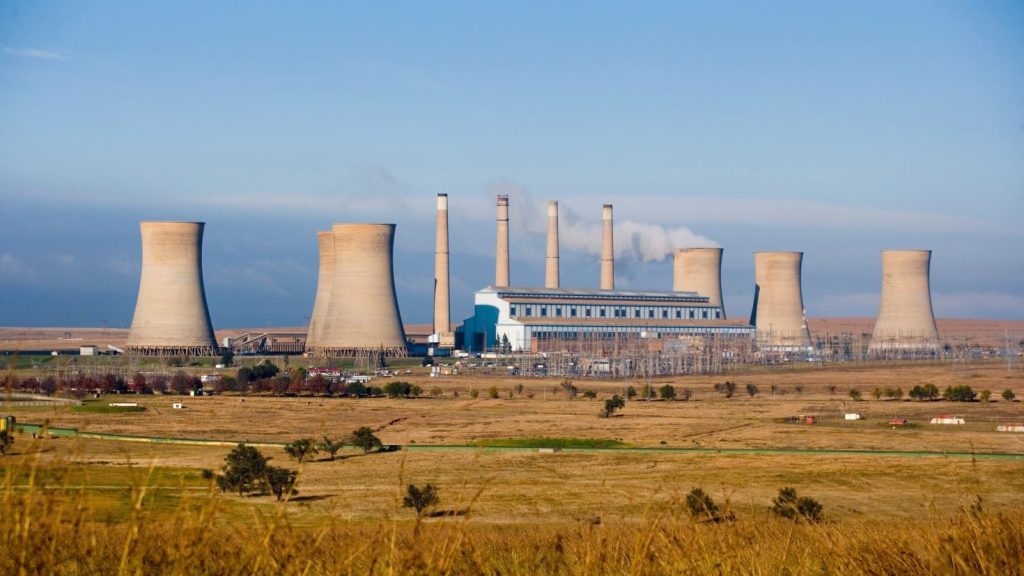
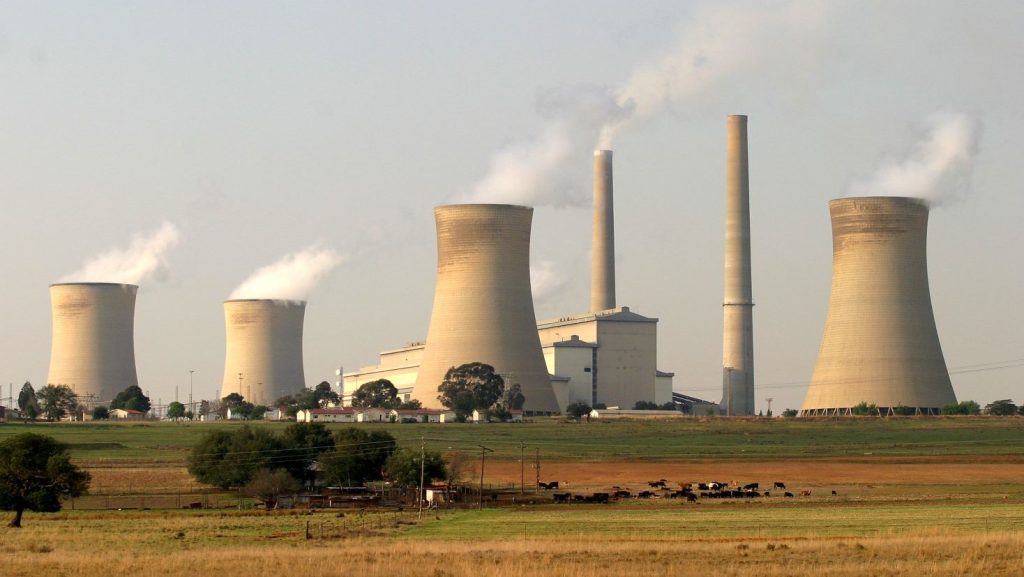
Friday, 16 October 2026: Eskom continues to strengthen South Africa’s energy security, with its financial year-to-date Energy Availability Factor (EAF) reaching 68.2%, its highest level in six years. Compared with three years ago, the EAF has improved by 12.8%, returning approximately 6 536MW of generation capacity to the grid.
Improved generation performance has significantly reduced reliance on diesel-fired Open-Cycle Gas Turbines (OCGTs). Year-to-date diesel expenditure has decreased by R4.87 billion, or 80.47%, to R1.18 billion, compared with R6.05 billion over the corresponding period last year.
Unplanned outages have also improved by 6.67% year-on-year, equivalent to 3 001MW of generation capacity returned to service.
Eskom currently has 5 695MW of surplus capacity available as a platform for growth and industrialisation.
These gains reflect sustained operational improvements under the Generation Recovery Plan and have contributed to South Africa recording 518 consecutive days without loadshedding since 16 May 2025. Improved fleet performance, lower unplanned outages, increased generation capacity and reduced reliance on emergency generation continue to strengthen security of supply.
During testing activities associated with the planned maintenance outage of Koeberg Unit 2 this morning, an electrical protection system associated with Unit 1 operated as designed for a disturbance outside of the tolerance limits, resulting in the automatic trip of the Unit 1 400 kV and 24 kV breakers. As designed, the protection system safely disconnected Unit 1 from the grid, and the unit was taken offline.
The unit was taken offline, and Engineering teams are conducting detailed investigations and fault-finding activities to determine the cause of the protection system operation and identify any required corrective actions.
There are no nuclear safety concerns associated with this event. All nuclear safety systems remain fully operational, and Koeberg Nuclear Power Station remains in a safe and stable condition.
Eskom has sufficient generation capacity available within the power system to accommodate the temporary loss of Unit 1’s output. As a result, the event does not affect Eskom’s ability to meet electricity demand.
Eskom’s year-to-date relative particulate emissions performance remains within the target of 0.35kg/MWhSO. Despite a slight increase in particulate emissions during September, performance remained within target, continuing the sustained progress achieved since October 2025, when emissions levels began consistently tracking below the target. Eskom remains focused on improving generation reliability while strengthening environmental performance across its generation fleet.
In parallel, Eskom is accelerating progress towards its March 2027 target of eradicating load reduction, with approximately 1.5 million customers no longer affected by the intervention. Seven provinces have achieved full elimination, while the number of affected customers has declined from approximately 1.69 million to 193 556, representing an 88.6% reduction and leaving 2.7% of Eskom’s customer base affected. The remaining impact is confined to selected areas in Gauteng and KwaZulu-Natal, where approximately 80% of previously affected customers have already been returned to normal supply. Efforts continue in the remaining communities as Eskom advances towards the complete eradication of load reduction.
Key Performance Highlights at a glance
Eskom provides key performance highlights for the past 7 days, the financial year-to-date and since March 2023, when the Generation Recovery Plan commenced as a key part of the Eskom turnaround.
Energy Availability Factor (EAF)
- Between 9 and 15 October 2026, EAF was higher compared to the same period last year, at 70.80% compared to 63.58%.
- The financial year-to-date (1 April to 15 October 2026) EAF has improved to 68.2%, a 5.57% improvement from the 62.63% achieved during the corresponding period last year.
- This remains the highest financial year-to-date EAF achieved in six years, reflecting the impact of sustained operational improvements and structural interventions implemented across the generation fleet.
- Compared with the same period three years ago, Eskom’s EAF has improved by 12.8%, returning approximately 6 536MW of generating capacity to the grid. Notably, 64% of the coal fleet is currently operating at EAF levels between 60% and 97%.
Unplanned Outages (Unplanned Capacity Loss Factor – UCLF)
- Between 9 and 15 October 2026, average unplanned outages decreased to 7 707MW from 10 646MW in the corresponding period last year, a reduction of 2 939MW or 28%.
- Between 9 and 15 October 2026, the UCLF improved significantly from 22.22% in the corresponding period last year to 15.73%, reflecting sustained operational gains and a progressive shift from recovery to reliability.
- For the financial year-to-date (1 April to 15 October 2026), UCLF has reduced to 18.9%, which is 6.67% lower than the same period in the previous year.
- Average unplanned outages have been reduced by 7 281MW over the past three years, declining from 16 345MW to 9 064MW.
Planned Maintenance (Planned Capacity Loss Factor – PCLF)
- Between 9 and 15 October 2026, planned maintenance remains aligned with Eskom’s reliability and sustainability objectives, with the PCLF averaging 12.72%, significantly higher than 11.31% recorded in the corresponding period last year.
- For the financial year-to-date (1 April to 15 October 2026), planned maintenance was at an average of 6 043MW, accounting for 12.72% of total generation capacity, higher than the 11.31% (5 309MW) recorded over the same period in the previous year.
- Three years ago, planned maintenance was at an average of 4 477MW, accounting for 9.59% of total generation capacity.
Diesel Usage
- Eskom did not utilise OCGTs for electricity generation during the past week. The minimal diesel consumption reported was attributable to an outage and not to generation requirements.
- For the financial year-to-date (1 April to 15 October 2026), OCGT generation was 152.41GWh, approximately 85.05% lower than the corresponding period last year.
- The continued low utilisation of OCGTs reflects improved fleet performance and reduced reliance on diesel-fired generation to meet electricity demand.
- The financial year‑to‑date OCGT load factor stands at 0.95%, lower than the 6.34% recorded over the same period last year, reflecting a significantly reduced reliance on diesel-powered generation and remaining well below the target annual load factor of 3%.
- Comparing the annual spend for the financial year ended March 2023 to the annual spend for the financial year ended March 2026, diesel expenditure reduced by R23.0 billion.
Today’s evening peak is forecast at 23 966MW, against available capacity of 26 143MW excluding gas.
Progress in Ending Load Reduction
Seven provinces remain free from load reduction, with 89% of targeted customers restored to normal supply and only 193 556 customers, or 2.7% of Eskom’s customer base, still affected.

Figure 1: Load Reduction status per province
Although the power system remains stable and generation capacity continues to exceed demand, illegal connections and meter tampering persist in certain localised areas, driving infrastructure damage and posing serious safety risks. Eskom continues to implement load reduction as a temporary, targeted measure in high-risk areas to protect both communities and the electricity network.
To address these challenges sustainably, Eskom has launched a phased programme to eliminate load reduction by 2027. The programme targets 971 feeders and will benefit approximately 1.69 million customers across all provinces, out of Eskom’s total customer base of 7.2 million. Key interventions include the rollout of smart meters, the integration of Distributed Energy Resources (DER), and the expansion of Free Basic Electricity (FBE) support.
These measures will be accompanied by targeted customer education initiatives.
Progress on Key Interventions
Smart meter rollout:
To date, 521 453 smart meters have been installed on load reduction feeders, reaching approximately 90% of the 577 347 target for high-priority areas. Approximately 83% of these installations are concentrated in Gauteng, Mpumalanga, Limpopo and KwaZulu-Natal, where pressure on the network is highest. The rollout remains focused on high-loss areas impacted by illegal connections, infrastructure overloading and electricity theft.
Despite ongoing stakeholder engagement, including work with ward councillors, public meetings and media platforms, resistance in some areas continues to affect progress. These include safety incidents, intimidation and work stoppages, resulting in delays, with more than 122 000 planned installations impacted to date.
Feeders removed from load reduction:
Seven of South Africa’s nine provinces have been completely removed from load reduction.
A total of 600 feeders have been removed from load reduction, representing approximately 62% of the 971 target.
- 163 feeders in Limpopo and Mpumalanga (exceeding the target of 150), with both provinces achieving full elimination.
- 258 feeders in Gauteng (41.5% of the target of 604).
- 14 feeders in the Eastern and Western Cape (100% of the target), with both provinces achieving full elimination.
- 150 feeders in the Free State and KwaZulu-Natal (77.7% of the target of 193), with the Free State achieving full elimination.
- 15 feeders in the North West and Northern Cape (exceeding the target of 9), with both provinces achieving full elimination.
Customers benefiting:
An estimated 1 496 444 customers are no longer impacted by load reduction, representing approximately 89% of the 1.69 million customers targeted under the programme. This includes 670 785 customers in Limpopo and Mpumalanga; 502 277 in Gauteng; 29 812 in the Eastern and Western Cape; 243 342 in KwaZulu-Natal and the Free State; and 50 228 in the North West and Northern Cape.
Free Basic Electricity (FBE):
A total of 561 229 customers are registered for FBE, reflecting approximately a 16% increase from the baseline of 485 000 customers. This represents approximately 27% of the 2.1 million eligible customers.
Eskom continues to strengthen the network through targeted interventions, technology deployment and community engagement.
Eskom is calling on all affected communities to partner with its teams to help accelerate the elimination of load reduction, in line with planned timelines or sooner where possible.
Customers are encouraged to report illegal connections and infrastructure damage to the Eskom Crime Line at 0800 112 722 or via WhatsApp at 081 333 3323.
Eskom data sources
The Eskom Data Portal provides a 24/7 365 snapshot of system performance. [Eskom Data Portal].
Since May 2024, Eskom has released a detailed power system update every Friday evening, providing a consolidated view of key areas of its performance through the Media Desk and across its social media platforms. This is a deliberate effort to improve transparency.
Eskom will provide its next update on Friday, 23 October 2026, or communicate any significant developments as they occur.
ENDS