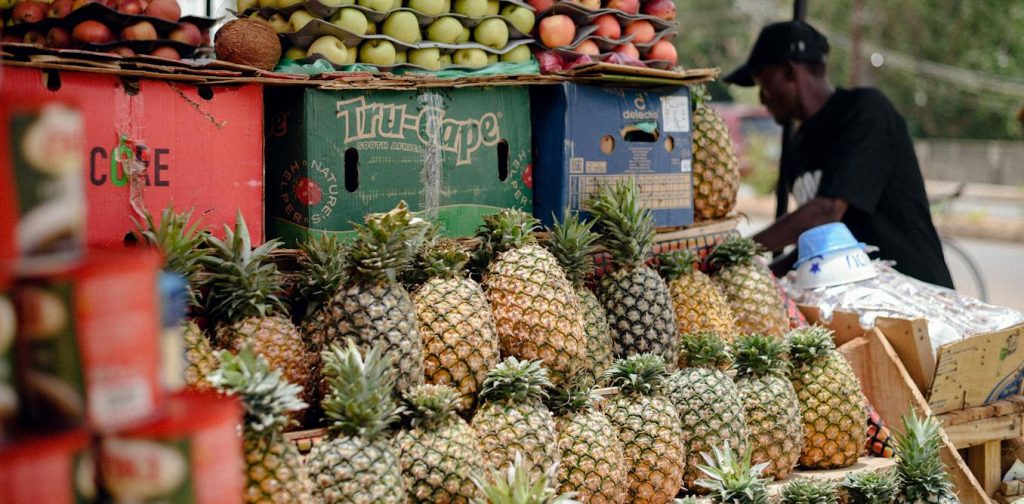
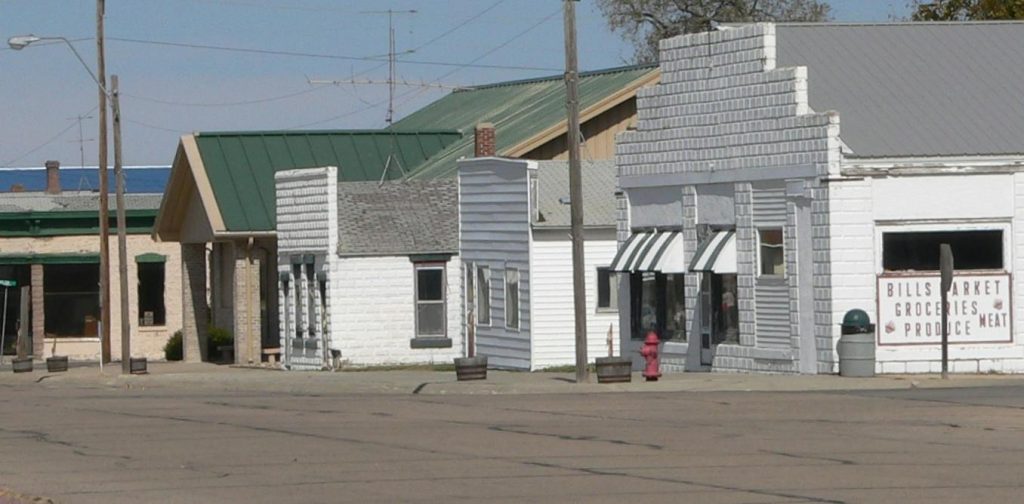
The farmer-poet Wendell Berry once described a dystopian world where society is singularly directed toward “the objective” – a relentless drive for industrial extraction that leads to the destruction of nature and communities.
The idea captured Berry’s concerns about the industrialization of agriculture and the expansion of natural resource extraction that became prominent across rural America in the latter decades of the 20th century.
Over nine decades, Berry watched how agribusinesses’ and farm owners’ pursuit of productive efficiency and maximum profits led to machines and synthetic chemicals replacing human farm labor, and the replacement of diversified farms with monocropping and concentrated animal-feeding operations. Across the U.S., he saw small farms disappear, often consolidated into vast corporate businesses with absent owners.
What gets lost in this pursuit of production and profit, he noted, are community, human dignity and flourishing, natural beauty and ecological well-being.

AP Photo/Teresa Crawford
As agriculture researchers and rural sociologists, we, like Berry, have seen how the industrialization of agriculture has changed the face of rural America and hollowed out its communities.
Once-thriving main streets in rural towns have slowly lost their businesses, with fewer farm-related jobs to keep local residents in the area. Machine dealers and suppliers of farm input such as seeds, fertilizer and pesticides have disappeared. Local grocery stores have been replaced by gas station convenience stores. Schools have shrunk or consolidated with the population decline. Hospitals have closed.
This “unsettling of America,” in Berry’s words, shows that the farm economy and the rural economy no longer rise and fall together. Rural communities continue to decline despite farm booms and busts.
Losing farming’s rural economy multiplier effect
Since the late 1940s, the number of farmers in the U.S. has plummeted by nearly 90%, falling from 5.9 million in 1948 to only 715,000 by 2025.
During the same period, the agricultural workforce has shifted from mostly farm owners – about 78% – with a few hired hands in 1948 to one today where most of the work is done by farm laborers, about 68% of the workforce. This means profits from farming mainly flow to a small number of farm owners, while the people doing the farm work are paid much less.
The loss of small, owner-operated farms, where a farm family could make a living, is one reason many rural communities have lost population over the past century.
In prior eras, farming energized rural communities as money circulated in the rural economy, supporting rural businesses and populations – what is termed a “multiplier effect.” Today, local suppliers and services are harder to find, and farm profits instead flow to owners outside the community.
Agriculture today resembles capital-intensive natural resource extraction, like mining, where a small number of very profitable businesses operate most acres in the county. Such farms employ few people at low wages, and profits accrue to distant landlords and investment firms. This shift further reinforces rural decline.
The farm economy of the 21st century does little to create additional jobs in rural America. An analysis of 11 counties in Iowa found that every US$1 million of agricultural sales creates 2.4 total farm jobs and 1.6 spin-off jobs in other nonfarm businesses, for a total of four new jobs.
By contrast, healthcare creates 10 new jobs and construction creates seven new jobs in all for every $1 million in sales. Both pay good wages, which keeps rural people from leaving and helps rural economies thrive. Both also create more spin-off jobs. In short, agriculture produces profits for the company, whereas healthcare and construction produce good-paying jobs for rural residents.
More small farms can help communities thrive
In the mid-1940s, the U.S. Senate commissioned two studies on the social impacts of economic concentration and corporate monopolies.
In one, Walter Goldschmidt, an anthropologist at the University of California, Berkeley, described two agricultural communities in California, one with a few large farms and the other with numerous smaller farms. He evaluated the social qualities of each and found that the community with more small farms had a higher standard of living and quality of life than the community with a few large farms.
The other study, overseen by Columbia sociology professor C. Wright Mills, compared urban manufacturing areas in the Midwest. It found that locations with many small companies had a more robust economic life, with higher socioeconomic well-being, than areas dominated by a few large firms.
Many rural sociologists have tested these findings since then. One, a Cornell study led by rural sociologist Thomas Lyson, found a way to counter the effects of farm consolidation. Using U.S. Census of Agriculture and other county-level data, it found that communities with large-scale industrial-style farms that also had politically active populations and a high percentage of people running small, independent businesses tended to have higher levels of social well-being than those without.
The effect of economic concentration
Looking at the agriculture sector in 2026, it’s clear that policymakers have not listened to the concerns raised by Berry or the rural sociologists.
According to the latest Census of Agriculture, America had fewer than 2 million farms in 2022. Fewer than 6% of those farms accounted for over three-quarters of all agricultural production.
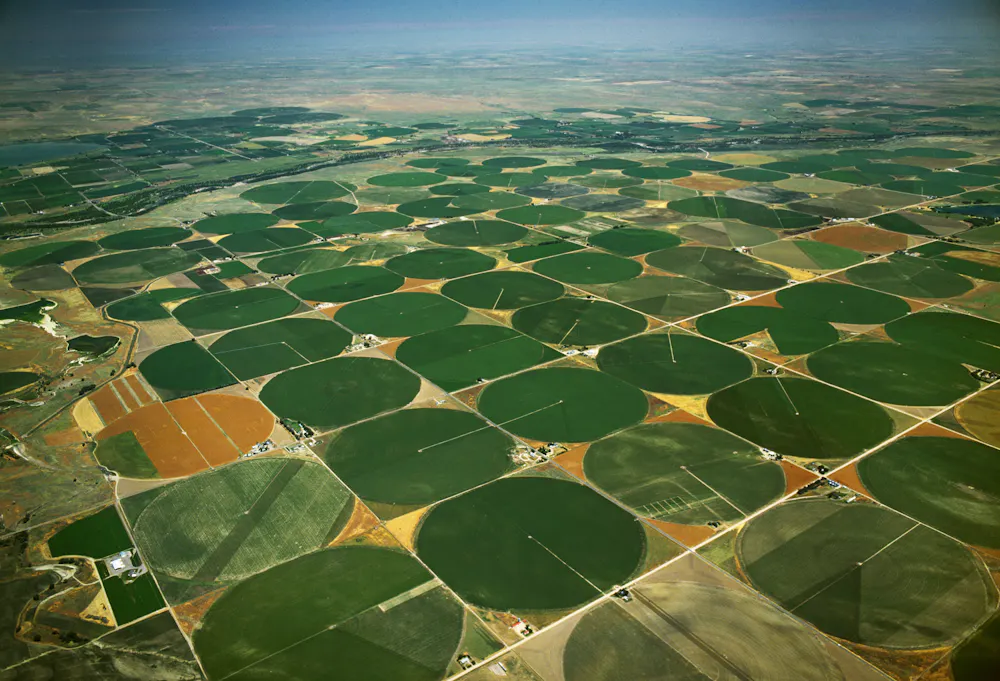
Farms are getting larger and more specialized. Economist Jim MacDonald documented that half of all cropland in 2017 was on farms with 1,445 acres, more than double the 650 acres in 1987. Half of all dairy farms had more than 1,300 cows in 2017, up from 80 in 1987. Half of all pig farms in 1987 marketed 1,200 pigs or more – the midpoint is currently over 50,000 pigs per year.

USDA
The supply chain is also shrinking, leaving farmers with fewer choices. Today, fewer companies control more of the markets where farmers buy their fertilizers and pesticides or sell their products, which means that farmers have less control over what they can raise or sell.
For instance, just two companies accounted for 71.6% of the U.S. corn seed market in 2018-2022, and those same two companies accounted for 65.9% of the soybean seed market, according to USDA researchers. Twenty years earlier, the top two companies in those markets accounted for 47.2% of the corn seed market and 41.8% of the soybean seed market.
When four or fewer firms control 40% or more of a market, farmers tend to pay more for seeds, fertilizer and pest control and receive less for their commodities, while consumers continue to face higher prices.
Consolidation of land and commodity markets at the farm level often goes unnoticed and sometimes undocumented.
University of Iowa economist Silvia Secchi describes how changes in the U.S. Census of Agriculture in 2002 and in 2017 “obfuscates the degree of consolidation” in the farm sector by allowing farms to report up to three or four farm operators. These changes have led to the official count of over 3 million farm operators, even though there are fewer than 2 million farms.
By looking at the volume of sales, Secchi found that fewer than half of these 2 million farms produce commodities worth more than $1,000 annually.
She contends that this way of counting farmers does a double disservice to small farm operators. First, it lumps disadvantaged farmers into a group that includes retired farmers and farmland owners who might be using their land as a tax write-off. Second, when the overall farm incomes are averaged, the inclusion of these small farmers make the large, high-value farmers appear to need more federal support.
How to improve conditions in farm country
Restoring the vibrant rural farm economy of the past may be unrealistic, but some policies could at least improve conditions.
Devising new – and enforcing existing – antitrust laws to break up oligopolies and monopolies in the materials farms need, such as seeds and fertilizer, as well as in processing and trade could give farmers more choices about what to raise and where to sell it, while protecting consumers from high prices.
Jim Wark /Design Pics Editorial/Universal Images Group via Getty Images)
Right-to-repair laws could help farmers gain more control over their expensive machinery.
Farm subsidies could be directed to smaller farmers who produce food – many of whom were inspired by Berry to become farmers – rather than toward the largest farmers who produce a few commodities at a massive scale.
And finally, policymakers can develop rural policies that actually invest in the rural environment and communities, rather than simply subsidizing commodities in ways that primarily benefit the corporate owners of vast areas of farmland.

Leland Glenna has received funding from the USDA, USAID, and NSF.
David J. Peters receives funding from the U.S. Department of Agriculture, the National Science Foundation, the National Institute of Justice, and the U.S. State Department.
Keiko Tanaka receives funding from the Southern Sustainable Agriculture Research & Education Program.
Mary Hendrickson does not work for, consult, own shares in or receive funding from any company or organization that would benefit from this article, and has disclosed no relevant affiliations beyond their academic appointment.