
The history of labour migration in Botswana can be linked to the discovery of gold and diamonds in South Africa in the late 19th century. South Africa needed cheap labour, and men from neighbouring territories were pulled into the workforce as unskilled or semi-skilled workers in mines, factories, kitchens and farms.
Mine recruitment agencies like the Native Recruiting Corporation and the Witwatersrand Native Labour Association began expanding recruitment networks in Botswana in the 1930s.
Men in Botswana – a British protectorate and largely rural economy at the time – were open to labour migration for several reasons. They had to pay taxes to the colonial administration, and for that they needed cash. Some needed to pay traditional bride price in cattle, acquire ploughs for agricultural production, or educate their children. Drought pushed some farmers to look for other work.
So men were forced leave their families and migrate to work in South Africa or Southern Rhodesia (today’s Zimbabwe). They would return home only about once a year. This left women as primary caregivers in their families, in a society with a patriarchal culture, where men are normally in charge. As a Tswana phrase puts it: “Mosadi ke ngwana wa monna – A woman is a man’s child.”
Families experienced a variety of challenges and changes as a result, and their responses to the circumstances varied. Previous studies have examined the effects of men’s absence, but there hasn’t been much historical research on the impact on women and families of their return. As a women’s historian I was interested in this aspect.
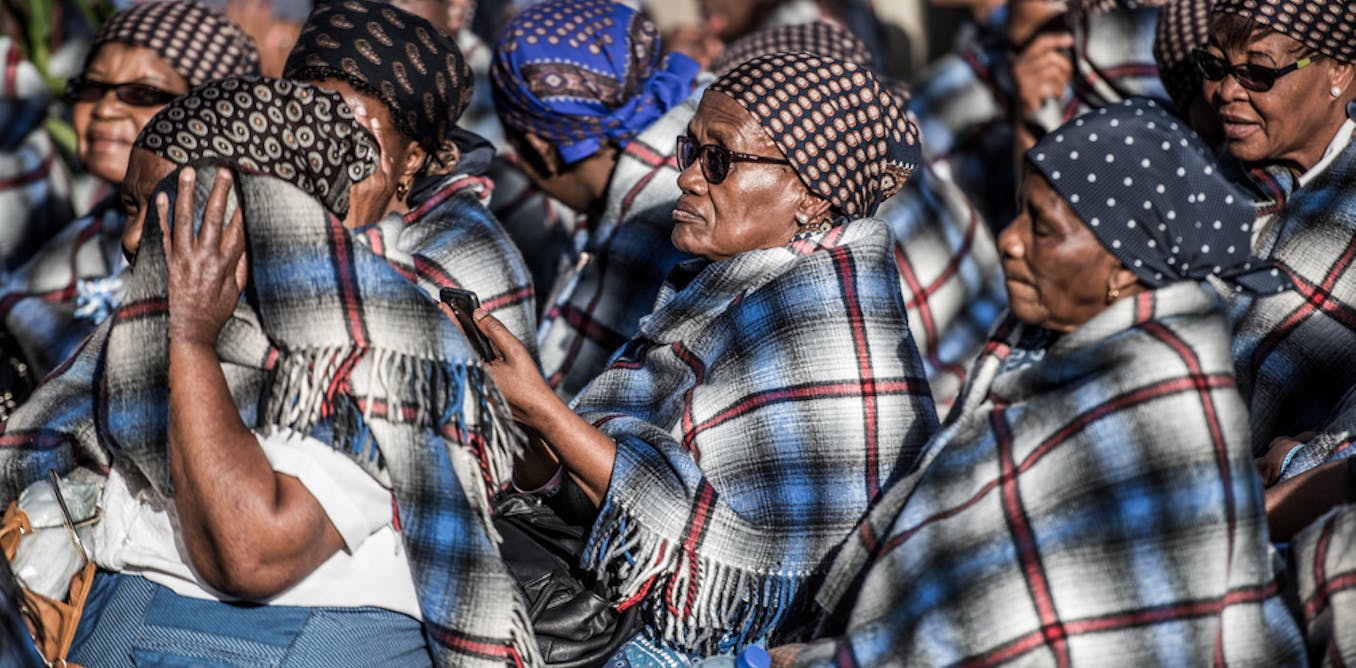
I interviewed 33 rural women in Botswana’s north-east and central disricts whose husbands had been away between 1970 and 2015 to ask them how this had affected them. From what they told me, it became apparent that most marriages did not work out for the best.
Their stories and perspectives add to what’s known about the economic and social impact of labour migration in the southern African region.
Labour migration and the disruption of families
Previous research has found that labour migration damaged families in the countries that provided workers. The tightly knit cooperative, social and economic unit became economically dependent on migrants’ income. Although it improved people’s lives economically, labour migration separated husbands and wives for long periods.
In Tswana society, marriage is typically seen as a husband and wife living together to raise children and make decisions. However, for women married to migrant workers, the situation was quite different. They spent much time apart; they only spent time together when the husband came home to visit, was on leave, or was between jobs.
It also shifted women’s social and economic status – and traditional gender roles. Even though the absent husband retained power over strategic family decisions, male migration improved the position of women, who became, in practice, heads of the house.
However, miners returned home when retired, retrenched or injured. Many also came back to Botswana following Botswana’s independence in 1966 and the discovery of diamonds in the country in 1967.
According to national censuses, the number of people living abroad decreased from 45,735 in 1971 to 38,606 in 1991 and 28,210 in 2001.
As these miners returned home, they removed their wives from critical aspects of running the household and reclaimed their roles as heads of families.
The return of husbands
My research aimed to analyse the redistribution of responsibilities and power dynamics between husbands and wives when migrants returned to Botswana.
The interviews with women revealed a range of outcomes. Three cases illustrate them. (I have changed the names to protect identities.)
Conflict
According to Julia Keneetswe, her husband’s return and attempt to reassert authority caused conflicts. Keneetswe provided a brief background of her marriage and the type of parent her husband was when he was working in the mines. She claimed that her husband’s contract was terminated because of violence. She stated that after his return, he was a violent man who nearly killed her.
Keneetswe said:
My husband was already at the mines when we got married. He would not come home even for the Christmas holidays or support the children. Since he came home after being fired for fighting with a colleague at the mine, there hasn’t been any peace. This man is extremely violent … He is also a useless drunkard, but I can’t leave him because where will I go, so I will just stay here and mind my own business while he takes care of his.
It is important to highlight that most women did not simply sit back and wait for their husbands to return; instead, they empowered themselves in various ways.
Independence
For example, Mary Mojadi had progressed to become head of department at the primary school where she was teaching. As a result of the differences they had when her husband returned, she opted to leave the marriage since she was not only educated and aware of her rights but also was financially stable and had the means to start a new life by herself.
Similarly, Kelebogile Sejo told me she had been on the village development committee for several years, a position that garnered her respect in the community. Although she was not the one who initiated the divorce, she did not oppose it because she had proved to herself over the years that she could build a life for herself and her children without depending on her husband.
Reunion
Not all reunions ended in fights and divorce. Beta Mojela’s experience was different. She said that when her husband left for the mines, she was left with nothing but uncultivated land. She took it upon herself to start a horticultural business, which became successful. When her husband retired, he returned home to an up-and-running business, and they continued working together to grow the business.
Conclusion
My research looked at labour migration from Botswana through a feminist lens. It noted that migration was a challenge to the patriarchal nature of Tswana society – the belief that men ought to be the head of the family.
Some women who had spent significant time without husbands failed to adjust to life in the shadow of their husbands when they returned. Miscommunication and a lack of compromise led to conflicts in some marriages. But there were cases in which the couples reunited.
The return of husbands did not have the same results or reception for different families. Nonetheless, these circumstances allowed some women to evolve as heads of families and become more independent.

Unaludo Sechele received funding from American Council of Learned Societies- African Humanities Program. She is affiliated with University of the Free State- International Studies Group.