
Sustainable business practices are often seen as a luxury that only rich countries can afford. And these days, some of the biggest economies, including the U.S., are backtracking on those commitments.
But what if businesses had an incentive to adopt practices that help the environment because it made sense for the bottom line?
We are researchers of business and sustainability who ran projects in both Jordan and the U.S. to see how entrepreneurs could adopt environmentally friendly practices in their day-to-day operations. In essence, we tried to embed in their business model the principle known as “circularity”: Products and materials should stay in use as long as possible through repair, reuse, remanufacturing and recovery rather than just being thrown away.
We found that these ideas worked best when they served what business founders were already trying to do, rather than when presented as a separate cause. And entrepreneurs responded best when sustainability was framed as an opportunity rather than an obligation and was connected to what they already cared about.
We argue that the adoption of such practices, more generally, shouldn’t require businesses, whether established or just starting up, to choose between profit and sustainability. Often, the two point in the same direction. When startup founders build products that last longer, recover more value from materials and reduce dependence on fragile supply chains, they often create a more robust business. The environmental benefits follow naturally.
Frustration, then progress, in Jordan
We spent two years inside an entrepreneurship program in Jordan, from 2021-23, trying to help founders build successful businesses around circularity. What we learned surprised us.
Our first cohort looked promising on paper, consisting of 18 recruited participants with formal knowledge of business and sustainability. We then assigned them to specific waste sectors, such as polyester waste, divided among four teams. Our training relied heavily on lectures and presentations rather than practical application.
The results were disappointing. Only one of the four teams survived the incubation phase and went on to work in a business.
We also saw that many participants became frustrated. Some were assigned projects they didn’t really want to pursue. Team conflicts emerged. Even though they had some creative ideas and good prototypes, such as coasters and other promotional items made from melted polyester waste, most ventures and product pitches didn’t survive beyond the program. One participant described the project as “destined to fail.”
Our conclusion: We were training them the wrong way.
So we changed almost everything. For the second cohort, which numbered 34, we stopped focusing on what people knew and started paying attention to how they thought. During recruitment, we looked for signs of resourcefulness, creativity and the ability to spot opportunities where others saw problems. These were people who could make something out of limited resources and recognize opportunities that others miss, like creating upcycled T-shirt designs from textile waste or designing a prototype for a hydroponic composting unit for households.
We also stopped assigning entrepreneurs to waste categories. Instead, we encouraged them to pursue problems and products they cared about, such as supporting local farmers, and allowed teams to form naturally.
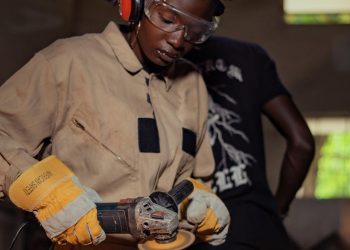
Most importantly, we shifted from classroom lectures to project-based learning. Rather than hearing about circular economy concepts, entrepreneurs used tools and worked directly on real ventures.
One participant went to restaurants in Amman, Jordan’s capital, and asked them to let her collect their stale bread at the end of the day. Most agreed, as it saved them money on garbage collection fees. She started toasting and grinding the bread and selling it to farmers as animal feed. The business was a success.
Overall, the difference between our two cohorts was dramatic. Five teams out of eight made it through incubation, and more ventures survived, including the bread-to-feed company. Teams functioned better, while business ideas became stronger. The entrepreneurs developed more innovative and more robust business models. A year later, many of the ventures were still operating.
The lesson was surprisingly simple: Sustainability training works better when entrepreneurs are building something they care about rather than being taught abstract concepts.
Success in the US
The Jordan project taught us how to build a circular program from scratch. However, most entrepreneurs won’t enter a program designed around sustainability in the first place. They enter “accelerator” programs that fast-track a young startup’s development, and these are typically built around goals like growth, manufacturing or getting a product to market.
So we tried a different approach in the U.S., after we returned from Jordan.
This time, we embedded circularity into an existing accelerator that worked with manufacturing firms, working with its staff to integrate our approach throughout their curriculum. The program opened with a session on circularity, and from there we built it into the training wherever it fit: risk management, quality management, manufacturing and product design.
The goal was to reach entrepreneurs who hadn’t come for a sustainability project at all. Then, we would see whether circularity could take hold when it was presented as part of the work they already cared about.
We discovered that it could. Participants who hadn’t previously considered circular approaches began adopting them – because they weren’t presented as a separate environmental agenda but as part of building a stronger business.
This is what we call competitive sustainability. A company that designs products to be repaired rather than discarded reduces waste and increases profit. A company that recovers materials from used products can become less dependent on volatile supply chains. A company that remanufactures components can save money while reducing environmental impact. The environmental benefits can be real even when they are not a founder’s primary goal.
For example, one entrepreneur had initially planned to produce a medical device consisting of mostly disposable parts, which meant more waste and a larger carbon footprint once it was discarded. After working with us, the team redesigned the product so that only a few parts were disposable while the rest could be repaired and reused.
The change doesn’t just produce a more sustainable product. It also has a clear business case by making manufacturing easier while lowering the cost and broadening the appeal to customers.
Making smart choices early
What entrepreneurs should also understand is that sustainability applied early can give a company a big competitive advantage. Many view these principles as something to address once the business succeeds, but that’s often the most expensive moment to make changes. Decisions about materials, ease of repair, recovery and product lifespan are much easier to make while a product is still being designed than after production.
Much closer to home for us, Tri Tower Telecom in Rochester, New York, is an example of how a business can grow when this principle is embedded from the beginning. It was started with the premise of helping telecom companies keep costs down by having access to preowned equipment.
Instead of asking startups to redesign successful products after they’re on the market, we believe they should be encouraged to make smarter design choices from the beginning. Those choices, in turn, can strengthen the business while reducing waste and improving resource use.
Sometimes the fastest route to sustainability isn’t taken by asking entrepreneurs to care more about waste – it’s by showing them that wasting less can be good business.

The authors do not work for, consult, own shares in or receive funding from any company or organization that would benefit from this article, and have disclosed no relevant affiliations beyond their academic appointment.