At the Commonwealth summit in Antigua in November 2026, Britain’s King Charles expressed sorrow for Britain’s role in the slave trade.
Days earlier, UK prime minister Andy Burnham said Britain was open to a formal apology but ruled out financial reparations. Ghana’s president, John Mahama, replied that dialogue must go beyond an apology to reparatory justice.
The exchange neatly captures the impasse in the debate over reparations. Africa’s leaders are pressing harder than ever: the African Union has made 2026-2035 a decade of reparations. Former colonial powers offer words of regret, but carefully avoid any hint of material reparations.
The most prominent claims for reparations refer to vast historical wrongs perpetrated over centuries: the transatlantic slave trade, or colonial rule as a whole. Corresponding estimates of what is owed often run into trillions of dollars.
These claims carry great moral force. But they also raise questions that no court, and even fewer treasuries, can realistically begin to answer. Indeed, when the questions are so broad, there remains enormous ambiguity about who should pay whom, and on what legal basis.
Former colonial powers take advantage of this ambiguity to defer more substantive engagement. In March 2026, Britain argued at the United Nations that there is no duty to repair acts that were lawful when committed. In 2024, Portugal’s president said his country should take responsibility for its colonial past. His government replied that it had no process or programme for reparations.
Building on extensive prior research by the authors on specific colonial firms and forced labour in Mozambique and Angola, two new UNU-WIDER studies take a broader perspective and reflect on what can make financial reparations claims successful.
We find that the most tractable claims have been led by direct victims (“survivors”) of colonial injustices. Moreover, these claims refer to specific kinds of harms – ones that took place in living memory, breached legal standards applicable at the time, and can be quantified in terms of their duration, scope and (where possible) losses faced by victims.
Applying this logic, we argue that forced wage labour in Portuguese Africa represents a promising candidate for future reparations claims. Drawing on data from colonial archives, we estimate this system cost workers in Mozambique and Angola a cumulative total of around €1.2 billion, valued in contemporary prices.
A review of recent reparations cases
Our first study reviews the main colonial- and slavery-era reparations claims brought from sub-Saharan Africa since 2001. We group them by who has led the claim:
-
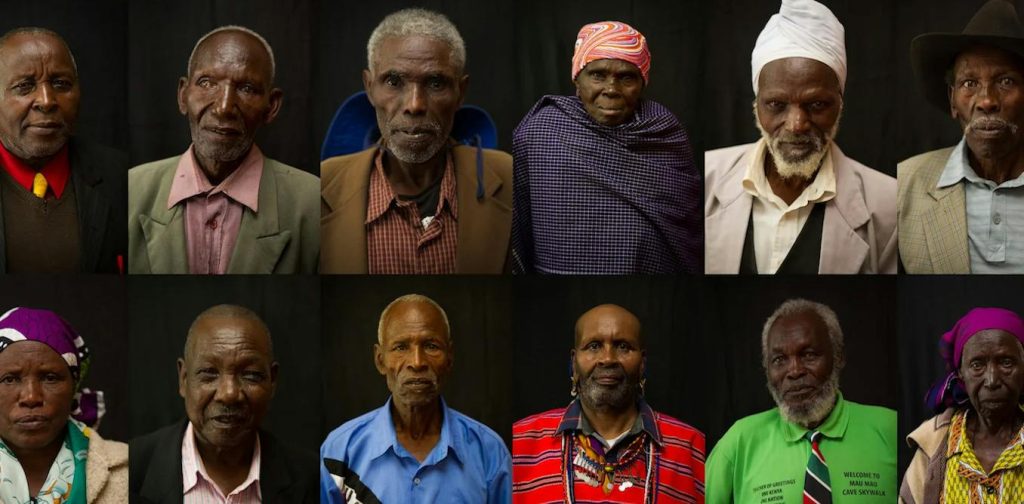
Survivors, such as the Kenyan Mau Mau veterans who sued the UK government. In 2013 Britain settled, paying £19.9 million to 5,228 victims of colonial-era abuse.
-
Indigenous groups, such as Herero and Nama descendants seeking redress from Germany for genocide in Namibia. Their lawsuit in the US was dismissed, and many community leaders rejected Germany’s 2021 offer of €1.1 billion in development funding, objecting to their exclusion from negotiations and to development aid being offered in place of reparations.
Read more:
Germany’s genocide in Namibia: deal between the two governments falls short of delivering justice
-
States, such as African governments pressing former colonial powers for redress.
-
International organisations, such as the African Union’s continent-wide reparations agenda.
All four groups face obstacles, some shared and others specific to their claims. Politically, defendants must be willing to engage. Legally, claims must clear time limits and the question of what the law prohibited at the time. And, in most cases, someone must quantify the loss.
The record shows that survivor-led claims have proved by far the most tractable. While their obstacles are substantial, they are narrower.
We believe that the systematic use of forced labour in Portugal’s African colonies represents a strong prima facie case for survivor-led claims.
Read more:
‘The Night Trains’: a masterly study into southern Africa’s murderous migrant system
We take up this issue in detail in our second study, which seeks to quantify the scope and present-day value of the losses incurred by workers subject to this system during the 20th century.
Portuguese forced labour
From the late 19th century, Portuguese law imposed a duty on African men: to work in its colonies. Under what was known as the contrato system, colonial administrators helped recruit men in Angola and Mozambique for private employers such as plantations and mines. These men often worked alongside workers recruited on a voluntary basis, whose wages provide a benchmark for estimating the income lost under coercion. Pay was set far below what a free labour market would offer.
The system was formally abolished only in the early 1960s, but coercive recruitment did not disappear immediately. So, individuals and their families who were subject to this system remain alive today.
Our study pulls together data on the contrato system, estimating the number of people it encompassed and the income those subject to it lost between 1910 and 1974. To do so, we draw on firm wage records, labour statistics and fiscal accounts from colonial archives. We separate two questions: how many men were coerced, and what they would have earned in a labour market without coercion.
The statistics indicate that at its peak, the system forced up to one in five able-bodied men in the two colonies into wage labour. In some districts in certain periods the share was far higher. In Zambézia, in central Mozambique, over 90% of adult men were forcibly recruited by the late 1940s. Across both colonies, we estimate that the income taken from workers was equivalent to about 2.2 million years of earnings at voluntary wages.
Workers lost income in two connected ways: employers suppressed their wages, while the colonial state imposed taxes that helped compel them into wage work. Wage suppression accounts for about three quarters of the estimated loss, and its share grew in the final decades of colonial rule.
An earlier study of Sena Sugar Estates, once colonial Mozambique’s largest private employer, found coercion cut workers’ pay by about two-fifths. Research on Angola’s Diamang diamond mines provides complementary evidence: real earnings among workers recruited under contrato more than doubled between 1960 and 1965, following the formal abolition of forced labour in 1961.
Valued in 2023 euros, the total loss comes to about €1.2 billion. That is a fairly modest figure compared to trillion-dollar estimates for more encompassing historical harms.
But our estimate addresses the uncertainty that former colonial powers invoke: it is specific, transparent, and can be tested on the evidence.
A bill for specific harms
This figure is not the full bill for Portuguese colonialism. It leaves out, among other harms, violence, land seizures, unpaid public works and the earlier slave trade. It is best read as an estimate for one, well-documented harm. And while this focus may appear excessively narrow, our argument is that this specificity is exactly what can make such a case tractable, and move the debate towards reparatory justice.
Read more:
Uganda-DRC reparations verdict raises questions about the price of justice
Indeed, a claim of this kind has identifiable victims, identifiable beneficiaries and a defensible number. Moreover, it does not rely on judging past acts by today’s law: forced labour, even where wages were paid, was already found to be in breach of international law while the contrato system continued to run. And some men conscripted in its final years during the 1960s are still alive, but now well past retirement age.
None of this replaces the broader political case for repair that the African Union and others are making. But apologies cost little. Claims grounded in solid evidence are harder to wave away. For surviving workers, the time to answer them is running out.
This article was coauthored with Peter Gibbon, independent researcher, formerly senior researcher of the Global Economy Group, Danish Institute for International Studies (retired).

The authors do not work for, consult, own shares in or receive funding from any company or organisation that would benefit from this article, and have disclosed no relevant affiliations beyond their academic appointment.
By Sam Jones, Senior Research Fellow, World Institute for Development Economics Research (UNU-WIDER), United Nations University. Originally published by The Conversation Africa.